Holiday shopping scams: what Black Friday and Cyber Monday scams look like in 2026, and what to do
Fake deal ads, delivery texts, order calls, gift card demands and fake charities reported this November, the wording to watch for, and who to call if you already paid.
Holiday shopping scams in 2026 mostly look like ordinary shopping: a deal ad in your feed or search results, a text saying a package is stuck, or a message about an order you didn't place. The safest habit is to go to the store or carrier yourself, by typing its address or opening its app, instead of using the link, phone number or ad in the message. If a seller or caller says you can only pay by gift card, wire transfer, crypto or a payment app, stop, because the FTC says that's how scammers ask to be paid.
With Black Friday on 27 November and Cyber Monday on 30 November, the FTC, the New York and Missouri attorneys general and the U.S. Postal Inspection Service have all issued holiday warnings this month. Below is what each scam looks like, the wording to watch for, and what to do.
Which holiday scams are being reported this month?
| Scam | Who warned about it |
|---|---|
| Fake deals in search ads and social media | FTC, 19 and 25 November 2026; BBB Wisconsin, 25 November 2026 |
| Fake package delivery texts and emails | Missouri attorney general, 20 November 2026; Postal Inspection Service holiday campaign, 2026 |
| Phishing emails about deals and free gift cards | New York attorney general, 24 November 2026 |
| Fake order, refund and account alerts | Missouri attorney general, 20 November 2026; Amazon, page updated 20 November 2026 |
| Requests to pay with gift cards | Missouri attorney general, 20 November 2026 |
| Fake charities | Missouri attorney general, 20 November 2026; FTC, 26 October 2026 |
The scale is real. The FBI says non-payment and non-delivery scams (you pay and the goods never come) cost people in the U.S. more than $503 million last year, as reported by the ABA Banking Journal on 25 November.
Fake Black Friday deals and lookalike shops
What it looks like. An ad in your Facebook or Instagram feed, or at the top of your search results, shows a big discount on something popular. The shop looks like a real brand or a friendly small business. BBB Wisconsin looked at nearly 6,000 reports to its Scam Tracker and found online purchase scams, including counterfeit goods, made up 46% of reported holiday scams. In the same research, 81% of people surveyed said AI makes it harder to tell whether a business or ad is real.
The FTC warned on 19 November that scammers buy paid search ads, and those ads can sit right next to ads from real companies. On 25 November it added that some paid ads carry the scammer's own contact details, and that it has seen sites copying local car dealerships and farm equipment businesses.
Wording to watch for. The New York attorney general says emails with subject lines like "Exclusive Holiday Deals" or "Free Gift Cards" are often phishing.
What to do.
- Scroll past the paid results. The FTC says the regular results below the ads are ranked by relevance, not by who paid most.
- Search the shop's name with the word "scam" or "complaint" before you buy.
- Type the store's address yourself if you know it.
- Check for a working customer service number and a real street address, as the New York attorney general suggests, and read the return policy.
- Don't trust the padlock. The FTC says scammers can encrypt sites too.
Fake delivery texts from "USPS", UPS or FedEx
What it looks like. A text or email says a package can't be delivered, the address is incomplete, or a small fee is due, and gives a link to fix it. The Missouri attorney general warned on 20 November about "fake package notifications, shipping updates, refund offers, and account alerts". The Postal Inspection Service's 2026 holiday campaign warns about messages from "the Postal Service asking for personal information because your package can't be delivered."
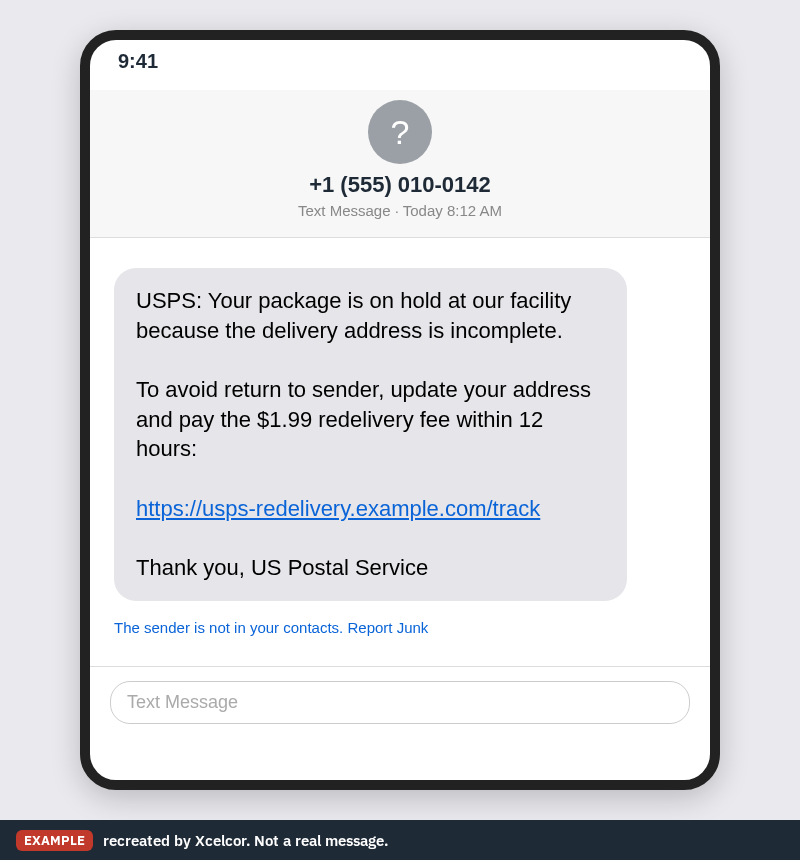
How to tell. The Postal Inspection Service is clear: USPS won't text or email you unless you first asked for updates with a tracking number, and that message "will NOT contain a link." It also says USPS doesn't charge for these services. So a USPS text with a link, or one asking for a fee, is fake.
What to do.
- Don't tap the link. Check the tracking number in the carrier's own app, or type usps.com, ups.com or fedex.com yourself.
- For a fake USPS text, copy the message without opening the link, paste it into a new email and send it to spam@uspis.gov.
- Forward any scam text to 7726 (SPAM), which reports the sender's number to your carrier.
Calls and emails about an order you didn't make
What it looks like. A call, text or email says an expensive order was placed on your account, or your account was locked, and gives a number to call or a link to "cancel" and get a refund. The Missouri attorney general names refund offers and account alerts among this season's scams.
Amazon, one of the companies scammers copy most, updated its scam advice on 20 November 2026. It says it won't ask for payment by phone or email, will never ask you to buy a gift card, and won't ask you to install software or give remote access to your device. It also says: "Don't call phone numbers sent by text or email, or ones you find in online search results."
What to do. Open the store's app, or type its address, and look at your orders. If the order isn't there, there's nothing to cancel. You can send details of a suspicious Amazon message to verify@amazon.com and report it to reportascam@amazon.com. Our guide to the fake Amazon call shows how these calls go, and the refund scam where they say they refunded too much covers the step where they ask for money back.
Someone wants to be paid in gift cards
What it looks like. The Missouri attorney general says scammers pose as government agencies, utilities, employers or family members and demand payment in gift cards. The FTC says they'll tell you which card to buy and where, then ask for the number and PIN, or a photo of the card.
What to do. Hang up. The FTC says "No real business or government agency will ever tell you to buy a gift card to pay them." If you're buying gift cards as presents, keep the card and the store receipt. If you're shopping for an older parent who gets scam calls, our holiday gift guide for elderly parents explains why gift cards are one present to skip.
Fake charity appeals
What it looks like. A call, text or social media ad asks for a holiday donation, sometimes using a real charity's name or one that sounds like it. The FTC warned about this on 26 October, and the Missouri attorney general listed charity fraud on 20 November. The FTC also says caller ID can be faked, even when it shows a real name or number.
What to do. Don't give to someone who reached out to you. Look the charity up yourself, type its address, and give through its own site. Giving Tuesday is 1 December, so expect more of these appeals next week.
Which payment methods should you avoid?
The FTC says never send money to anyone who says you can only pay by wire transfer, gift card, cryptocurrency or a payment app, because "it's almost impossible for you to get it back." It also says paying by credit card protects you best, since you can dispute a charge for something you never got.
| Payment | Use it for holiday shopping? |
|---|---|
| Credit card | Best choice. You can dispute charges for goods that never arrive. |
| Debit card | Fewer protections, and the money leaves your account straight away. |
| Zelle, Venmo, Cash App, PayPal friends and family | Avoid with sellers you don't know. Hard to get back. |
| Gift cards | Never as payment. Only scammers ask for them. |
| Wire transfer or crypto | Avoid. The FTC says it's almost impossible to get back. |
I already paid or clicked: what now?
Act today, and use the number on your card or in the app, never one from the message. The table shows who to call first. Our full guide on how to get money back after being scammed covers each one step by step.
| How you paid | Who to contact first |
|---|---|
| Credit card | The card issuer: report the charge as fraud and ask for a refund |
| Debit card | Your bank, the same day if you can |
| Zelle or bank transfer | Your bank: ask them to reverse it |
| Venmo, Cash App, PayPal | The app's own help section: ask them to reverse it |
| Gift card | The company on the back of the card: say a scammer got the number and PIN |
| Wire or crypto | The wire company or crypto exchange, straight away |
If you clicked a delivery link. The Postal Inspection Service says that if you interacted with the link, even without pressing "submit", you should tell your bank. If you typed in a card number, ask for a new card. If you entered a password, change it on the real site and turn on two-step sign-in.
Then report it. Tell the FTC at ReportFraud.ftc.gov, and the FBI at ic3.gov if you lost money. You can also warn other shoppers on the BBB Scam Tracker.
Being caught by one of these doesn't mean you were careless. They're built to look like the deals and delivery updates everyone gets in late November. If you're worried about a parent, our guide to signs an elderly parent is being scammed can help you bring it up, and you'll find more in our scams section.
Questions people ask
Is a USPS text with a link real?
No. The Postal Inspection Service says USPS only texts people who asked for updates with a tracking number, and those texts don't contain a link. USPS also doesn't charge for these services. Forward the fake to spam@uspis.gov and to 7726.
Is it safe to buy from a shop I found in a Facebook or Instagram ad?
Check first. Search the shop's name with "scam" or "complaint", look for a real street address and a working customer service number, and pay by credit card so you can dispute the charge if nothing arrives.
What's the safest way to pay for Black Friday deals online?
A credit card. The FTC says it protects you best, because you can dispute a charge for goods you never got. Never pay a seller who says you can only use gift cards, a wire transfer, crypto or a payment app.
I clicked a fake delivery link but didn't pay. Do I need to do anything?
The Postal Inspection Service says to tell your bank if you interacted with the link at all. If you entered a password, change it on the real site. Then check who to call by how you paid if anything was taken.
Sources
- FTC Consumer Alert: How to avoid holiday shopping scams in your search results (November 19, 2026)
- FTC Consumer Alert: Buy from small businesses, not scammers, this Saturday (November 25, 2026)
- U.S. Postal Inspection Service: Smishing
- U.S. Postal Inspection Service: Don't Get Hit by Holiday Crime (2026)
- New York Attorney General: Tips for New Yorkers to avoid holiday shopping scams (November 24, 2026)
- Missouri Attorney General Hanaway urges Missourians to stay vigilant against holiday scams (November 20, 2026)
- Amazon: 6 tips to help you spot and avoid scams impersonating Amazon (updated November 20, 2026)
- FTC: Avoiding and reporting gift card scams
- FTC: Online shopping
- FTC Consumer Alert: Spot scammers impersonating well-known charities and sweepstakes (October 26, 2026)
- WSAW: BBB Wisconsin says online purchase scams make up 46% of reported holiday scams (November 25, 2026)
- ABA Banking Journal: FBI, Treasury issue consumer advisories on avoiding holiday online scams (November 25, 2026)
Drafted with AI assistance from public sources, then checked and approved by Sarah Sterling, Director of Consumer Protection & Security Education on . See how we work, or tell us about a mistake at support@xcelcor.com.
More on Scams Family and older relatives Privacy